
Discussion: The Thought Process with Aging
How age transforms our cognitive perspectives through bio-psycho-social lenses and shapes our personal development.

The simplest answer to the question of how cognitive processes and perspectives transform through the human development cycle is the progression from input and stimulus to integration and response. In this simple statement, there is an encompassment of all things outside of the self and individual unit, dynamically interacting with the individual self and all that exists within. We can explore any number of theories that explain how cognitive processes and perspectives transform as individuals age, but let’s start with a statement from the “Home” section of this last module:
“Piaget’s theory suggests that cognitive development, after reaching the operational stage, is primarily about knowledge acquisition. In adulthood, individuals have numerous opportunities to learn new things. However, the extent of cognitive growth largely depends on the individual’s initiative and willingness to engage with
these opportunities.” (Papalia & Martorell, 2021, as cited in Touro University Worldwide [TUW], 2026)
I will take it back a little further to expand on my opening statement: the foundations for this proficiency are established through the simultaneous development of the nervous and the musculoskeletal systems. Simply put, an individual can only integrate and process (psychological context) the information from the outside world (socioenvironmental contexts) within the capacity of their biological system. Karatayeva (2025) discusses this in detail in her paper Psychological Development Characteristics in the Early Stages of Ontogenesis. “Biological factors determine the initial level and potential of psychological development” (Karatayeva, 2025). It is further explained that the brain’s various structures are not fully formed at birth but continue to develop through numerous significant changes over the following years (Karatayeva, 2025). When one considers that specific brain structures, along with specific musculoskeletal developmental milestones, are prerequisites for specific interactions and degrees of self-sovereignty and agency, then theories like Erikson’s and Piaget’s make sense.
“Neuropsychological studies show that brain development in early childhood is extremely intensive. During this period, the number of synaptic connections reaches its highest level” (Karatayeva, 2025). The emotional bond that exists between a child and mother form the foundation for a child’s sense of safety, trust, and emotional stability (Karatayeva, 2025). “By the end of the first year, the child develops the concept of object permanence that objects that disappear from sight still exist,” and by the second year, the child can demonstrate actions to solve simple problems due to the emergence of logical connections (Karatayeva, 2025). At this stage, the child’s sense of self is more established, which increases the overall desire for autonomy and independence (Karatayeva, 2025).
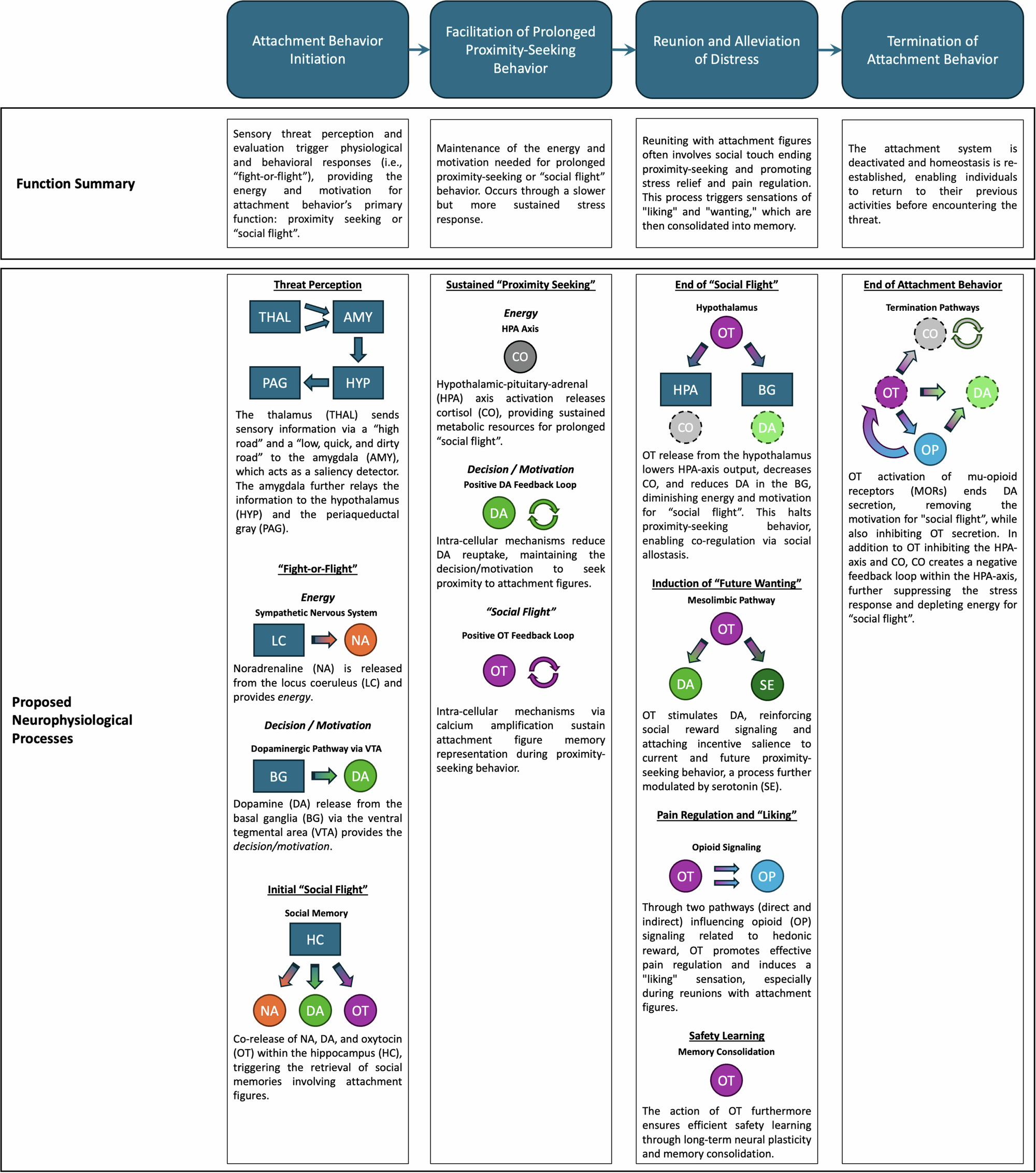
I just sat down with someone whom I once knew as a friend from a particular era of my life where my identity was at its (arguably) peak level of masking. We share enough similarities in the work that has both simultaneously been chosen and has chosen us, some of the traumas and challenges we have faced, and most importantly for me, the distant connection to a particular milestone era in our respective lives that I recognized the need to sit down and dig into understanding exactly all that we are discussing in this thread – the evolution of our cognitive processes and perspective through life and how they’ve impacted (and continue to impact) our respective personal developments and interactions within life. What she helped me come back to in our conversation was the understanding of attachment styles, the both conscious and subconscious choices we’ve made to move forward through lives driven by what I have just spoken about in the last paragraph – the simultaneous development of the brain, psyche, and self through various crucial periods of our lives. This drives what we have the confidence to achieve, as much as it drives the dysfunctional behaviors we engage in.
In established adulthood, individuals are “deeply absorbed in their occupational responsibilities while also meeting the responsibilities of a romantic relationship, caring for children, friends, aging parents, family members and pets” (Mehta & Arnett, 2023, as cited in Reifman & Niehuis, 2022). We have come to this era of our lives where it is absolutely crucial for individuals interested in leaving the world better than the way that they found it to know themselves, their triggers, their wounds, their weaknesses, their strengths, and in sum, themselves deeply enough to facilitate the way they navigate relationships and interactions with the outside world – and by “outside world,” I am including our children, partners, aging parents, extended family members, friends, coworkers, and everyone else beyond. It is important because, while these deeply embedded and developed patterns, responses, and perspectives can be helpful in some contexts, they may also be the very thing that perpetuates dysfunction and interferes with our deepest desires to develop and maintain meaningful interconnectedness and purposeful contribution to the world.
We see this clearly stated in Erikson’s respective stages of early childhood through late adolescence where the identity struggle is rooted in understanding one’s capacity and role all the way to the journey from young adulthood through old age where the struggle of identity is now contextualized through how well the capacity and role building allows one to navigate the world and what that looks like in terms of the subjective value add or detraction from the world. By midlife or middle adulthood, “Generativity is about ‘making your mark’ on the world by caring for others and accomplishing things that improve it” (Cherry, 2026). The natural pace of evolution from this stage as we reach older adulthood through the twilight years leads people to a realization that is found “If you look back and you’re satisfied with the way that things have gone in your life you’ll have this sense of ego integrity. However, if you look back and you have a lot of regrets... you will have this sense of ego despair” (Shuttlesworth, 2013, 10:05).
Going back to my conversation, I recognize that I chose to have it with her because, in a way, she is a bridge to the era of my life when I was most disconnected from the self I have chosen to become today. “The central position in the life course is captured by balancing gains and losses associated with the aging process, linking earlier and later periods of life, and bridging generations” (Infurna et al., 2020). As I step fully into this stage of my life as a leader in health and wellness, a leader in my family, and most importantly, the main character in my life, I recognize that the stakes are high when it comes to being able to lead by example and working through potential blocks that I may later come to regret in old age. I am at a point where fluid intelligence – the capacity to use deductive reasoning for problem-solving – is at its peak. According to Shuttlesworth (2013), it will decline in old age. I have reached, what some might call, the greatest vantage point in my life, to see all that it took to get me to where I am, with the capacity to still drive the direction the descent from the mountain, so to speak, will look like.

At the end of my life, I would hope to find myself on the side of integrity, rather than despair.
References
Cherry, K. (2026, March 31). Generativity vs. stagnation in psychosocial development. Verywell Mind. https://www.verywellmind.com/generativity-versus-stagnation-2795734
Infurna, F. J., Gerstorf, D., & Lachman, M. E. (2020). Midlife in the 2020s: Opportunities and challenges. American Psychologist, 75(4), 470–485. https://doi.org/10.1037/amp0000591
Karatayeva, L. U. (2025). Psychological development characteristics in the early stages of ontogenesis. Journal of Applied Science and Social Science, 15(12), 272–274.
Reifman, A., & Niehuis, S. (2022). Extending the five psychological features of emerging adulthood into established adulthood. Journal of Adult Development, 30(1), 6–20. https://doi.org/10.1007/s10804-022-09412-9
Shuttlesworth, M. (2013, June 7). Development Erikson, adolescence, middle, old age [Video]. YouTube.
Touro University Worldwide. (2026). MHS600: Health through the life span: Module 6: Middle adult [Course content].
https://portal.tuw.edu/